
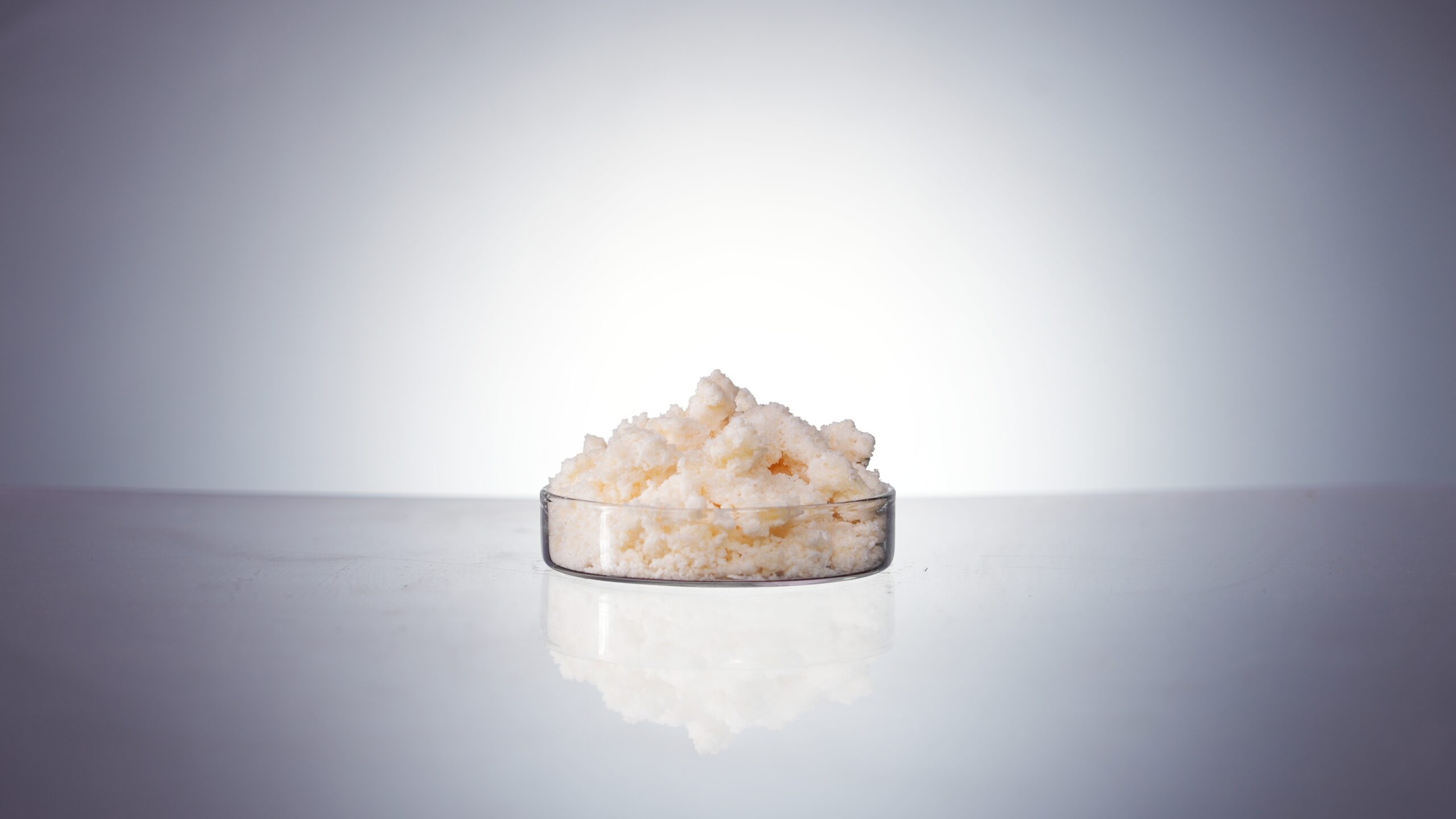
Egg Yolk Lecithin(For Injection) E98
Natural Egg Yolk Phospholipids is a Phospholipids mixture obtained by extracting and refining from egg yolks or egg yolk powder with appropriate solvents. Its main components are phosphatidylcholine and phosphatidylethanolamine. It is a milky white or light yellow waxy solid mass and is widely used in medicine, dietary supplements, and cosmetics.
Application
This is an ultra-high-purity phospholipid mixture extracted and refined from yolk powder, with Phosphatidylcholine (PC) ≥98%, specially developed for high-end injectable dosage forms. It features excellent emulsifying, solubilizing and liposome-forming properties, outstanding biocompatibility, pyrogen-free, non-irritating, non-sensitizing, and strong antioxidant capacity. It can significantly improve the stability, encapsulation efficiency and bioavailability of injectable preparations, ensuring safe and efficient medication.
Specifications
Physicochemical Indexes
| Parameter | Unit | Standard |
| Description | – | Milky white or pale yellow powder or waxy solid with a slight characteristic odor and a slightly greasy feel to the touch.
Dissolves in ethanol, ether, chloroform or petroleum ether (boiling range 40–60 °C), and is practically insoluble in acetone and water. |
| Acid Value | – | 应不大于20.0 Not more than 20.0 |
| Saponification Value | 195~212 | |
| Iodine Value | – | 60~73 |
| Peroxide Value | – | Not more than 3.0 |
| Free Fatty Acids | % | Not more than 1 |
| Triglycerides | % | Not more than3 |
| Cholesterol | % | Not more than2 |
| Palmitic acid | % | Not more than0.2 |
| Moisture | % | Not more than 3 |
| Protein | None detected | |
| Heavy Metals | ppm | Not more than 5 |
| Arsenic | % | Not more than 0.0002 |
| Bacterial Endotoxins | EU/g | Less than 2.0 |
Related Substance |
||
| Phosphatidylinositol(PI) | % | Not more than 5.0 |
| Lysophosphatidylethanolamine(LPE) | % | Not more than 1 |
| Sphingomyelin(SPM) | % | Not more than 3.0 |
| Lysophosphatidylcholine(LPC) | % | Not more than 3.5. |
| Total amount of LPE and LPC | % | Not more than 4.0 |
| Total Amount | % | Not more than 8.0 |
| Residual solvents | ||
| Ethanol | % | Not more than 0.2 |
| Acetone | % | Not more than 0.2 |
| Ether | % | Not more than 0.2 |
| Petroleum Ether | % | Not more than 0.05 |
| n-Hexane | % | Not more than 0.02 |
| Total Residual Solvents | % | Not more than 0.5 |
| Assay(On dry basis) | ||
| N | % | 1.75~1.95 |
| P | % | 3.5~4.1 |
| Phosphatidylcholine | % | Not less than 68 |
| Phosphatidylethanolamine | % | Not more than 20 |
| PC+PE | Not less than 98 | |
Microbiological Limit
| Parameter | Unit | Standard |
| Total Aerobic Microorganisms | cfu/g | Not more than 100 |
| Total Yeasts and Moulds | cfu/g | Not more than 100 |
| Escherichia Coli | /g | Not detected |
| Salmonella | /10g | Not detected |
Shelf Life
Sealed, protected from light, and stored at low temperature (below -18℃).
Under the above-mentioned storage conditions, the tentative shelf life is 24 months from the date of production.
Packing
Inner Packaging: The inner layer is a sterile low-density polyethylene bag for pharmaceutical use; the outer layer is a polyester aluminum polyethylene composite bag for pharmaceutical packaging.
Outer Packaging: Foam box with ice pack inside and carton outside.
Contact Us
- 24-hour online service
- Own factory processing
Product Category
FAQ
What is Soya Lecithin and what is it used for?
Soya Lecithin is a natural phospholipid-rich substance extracted from soybeans, commonly used as an emulsifier, stabilizer, and nutrient enhanceru00a0in the food, pharmaceutical, cosmetic, and feed industries. It improves texture, extends shelf life, and enhances nutritional absorption. Our AmiLifeu00ae Soya Liquid Lecithin is made from 100% Non-GMO soybeansu00a0and offers high purity for B2B applications.
Is Soya Lecithin safe for food applications?
Yes, Soya Lecithin is safe and approvedu00a0for use in a wide range of food applications by global regulatory bodies. AmiLifeu00ae Soya Liquid Lecithin (Food Grade) meets strict microbiological and chemical safety standards, is non-GMO, identity preserved, and manufactured under Good Manufacturing Practices (GMP)u00a0for international food-grade compliance.
Keywords: is lecithin safe, food-grade lecithin, lecithin in food, safe emulsifiers, Non-GMO food ingredients.
What are the benefits of using Non-GMO Soya Lecithin in food processing?
Using Non-GMO Soya Lecithinu00a0ensures compliance with clean-label trends and consumer demand for natural, traceable, and safe ingredients. It enhances emulsification, improves mixability, reduces fat separation, and maintains product consistency. AmiLifeu00ae Lecithin also supports health-conscious formulationsu00a0due to its phospholipid-rich profile.
Keywords: benefits of Non-GMO lecithin, lecithin in food processing, clean label emulsifier, sustainable ingredients.
Product Storage Conditions
Low-temperature storage is recommended, preferably frozen. We have completed stability tests for the product: it can remain stable for 2 years at 18u00b0C with no quality deterioration. Under accelerated stability testing at 25u00b0C, the assay content and peroxide value start to change after 2 months. When kept under high temperature and high humidity conditions with intact packaging, the product shows no abnormalities within 120 hours.